5505 N. Clark Street Chicago, IL 60640



Is Professional Teeth Whitening Safe for Your Enamel and Gums

Many Chicago patients ask the same question before their first whitening appointment. Is professional teeth whitening safe for your enamel and gums in Chicago? The short answer is yes — when performed correctly under dental supervision. But the fuller answer depends on your oral health, the method used, and how your teeth respond to whitening agents.
At Lakeshore Dental Studio of Chicago, Dr. Kapil Kella takes a patient-first approach to cosmetic care. That means addressing your concerns honestly before recommending any treatment. This article breaks down the science behind whitening safety so you can make an informed decision.
How Professional Teeth Whitening Works and Why It Matters for Safety
Professional whitening uses hydrogen peroxide or carbamide peroxide as the active ingredient. These compounds penetrate the outer enamel layer and break apart stain molecules inside the tooth. The process is chemistry-based, not abrasive, which is an important distinction.
Over-the-counter strips and gels use the same basic chemistry. However, they use lower concentrations and offer no professional oversight. A dentist can monitor your gum tissue and enamel response in real time. That oversight is what makes professional whitening significantly safer than DIY alternatives.
The concentration of peroxide matters greatly. In-office treatments typically use 25–40% hydrogen peroxide. Custom take-home trays prescribed by a dentist use 10–22%. These levels are calibrated for effectiveness without causing unnecessary damage to surrounding tissue.
Is Professional Teeth Whitening Safe for Your Enamel in Chicago?
Enamel is the hardest substance in your body. It does not regenerate once lost. Understandably, patients worry about anything that penetrates it. Research consistently shows that professionally supervised whitening does not permanently damage enamel structure.
Studies published in dental journals confirm that peroxide-based whitening causes temporary mineral changes in enamel. These changes reverse within 24 hours as saliva remineralizes the tooth surface. The enamel hardness and structure remain intact after treatment.
Here is what the evidence shows about enamel and professional whitening:
- No significant enamel erosion occurs at professionally recommended concentrations
- Temporary porosity resolves naturally through saliva remineralization
- Enamel thickness does not decrease after a standard whitening course
- Overuse or extremely high concentrations can increase risk — professional guidance prevents this
The key protective factor is dental supervision. Dr. Kella evaluates your enamel condition before recommending whitening. Patients with thin or compromised enamel may need alternative cosmetic options instead.
What About Gum Sensitivity and Soft Tissue Safety?
Gum tissue is more vulnerable to peroxide exposure than enamel. Direct contact with whitening gel can irritate or temporarily inflame the gums. This is one of the most common side effects patients report after whitening treatments.
Professional whitening minimizes this risk through custom-fitted trays and protective barriers. In-office treatments use a gum barrier gel before applying whitening agents. Custom trays from your dentist fit precisely to your teeth. This precision keeps whitening gel away from your gums.
Sensitivity typically appears as:
- Mild gum redness or tenderness for 24–48 hours
- Temporary tooth sensitivity to hot and cold foods
- Slight zingy sensation during or immediately after treatment
- Discomfort that resolves without treatment within a few days
These effects are temporary and manageable. Dr. Kella recommends using desensitizing toothpaste before and after whitening. Anti-sensitivity gels are also available for patients who experience stronger reactions.
Which Patients Should Avoid or Delay Teeth Whitening?
Professional whitening is safe for most healthy adults. However, certain conditions make whitening inappropriate or risky. Your dentist needs to screen for these before starting any treatment.
Patients who should avoid or delay whitening include:
- Those with untreated cavities or active tooth decay
- Patients with gum disease or significant gum recession
- Individuals with cracked teeth or exposed dentin
- Pregnant or breastfeeding women — as a precaution
- Children and teenagers whose enamel is still developing
- Patients with severe tooth sensitivity prior to treatment
Whitening also does not work on dental crowns, veneers, or bonding. These restorations do not respond to peroxide. If you have visible restorations on front teeth, your dentist should discuss realistic expectations with you upfront.
Patients with dental anxiety or those managing complex oral health needs can explore their full range of options at Lakeshore Dental Studio. Preventive Dentistry Chicago services can help restore your oral health before cosmetic treatments begin.
What to Expect During a Safe Professional Whitening Experience
A thorough consultation comes first. Dr. Kella reviews your dental history and examines your teeth and gums. This step identifies any issues that need addressing before whitening proceeds. It also sets realistic expectations for your results.
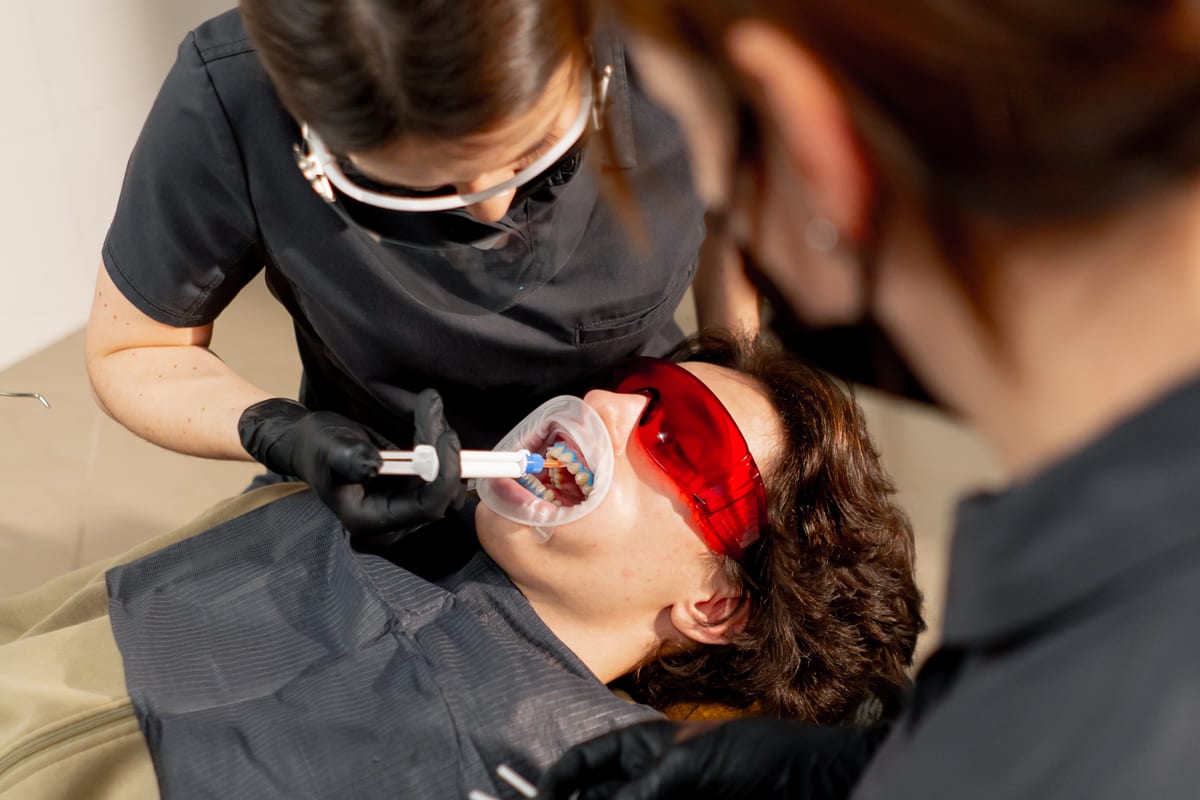
For in-office whitening, the appointment typically runs 60–90 minutes. Your gums receive a protective barrier. The whitening gel is applied in timed intervals. A curing light may be used to activate the gel between sessions.
For take-home trays, your dentist takes impressions of your teeth. Custom trays are fabricated to fit precisely. You receive professional-grade gel and clear instructions on duration and frequency. Results build gradually over one to two weeks.
Both methods are safe when used as directed. The professional setting ensures any unexpected sensitivity is addressed quickly. You are never left to manage side effects without guidance.
Maintaining Your Results Without Compromising Safety
Whitening results are not permanent. Most patients experience gradual re-staining over 12–24 months. Touch-up treatments help maintain your shade without overexposing your teeth to peroxide.
Daily habits also affect how long your results last. Limiting coffee, tea, red wine, and tobacco reduces re-staining. Brushing twice daily and maintaining regular cleanings support both whiteness and enamel health.
If you experience a dental emergency related to sensitivity or pain after whitening, contact your dentist promptly. Emergency Dentistry In Chicago Chicago is available for patients who need urgent care after cosmetic procedures.
Conclusion
Professional teeth whitening is one of the safest cosmetic dental treatments available today. When performed under proper dental supervision, it does not damage your enamel or cause lasting harm to your gums. The key is personalized screening, appropriate concentration levels, and professional oversight throughout the process. Dr. Kapil Kella and the team at Lakeshore Dental Studio of Chicago are here to help you whiten safely and confidently. Book Now to schedule your appointment with our team.
Frequently Asked Questions
Does professional teeth whitening permanently damage enamel?
No. Research shows that professionally supervised whitening does not permanently damage enamel. Temporary mineral changes occur but reverse within 24 hours through natural saliva remineralization. Enamel hardness and structure remain intact after a standard whitening course.
How long does teeth whitening sensitivity last?
Sensitivity from professional whitening is typically temporary. Most patients experience mild discomfort for 24–48 hours after treatment. Using desensitizing toothpaste before and after whitening helps reduce this reaction significantly.
Can I whiten my teeth if I have gum disease?
No. Active gum disease should be treated before any whitening procedure. Peroxide exposure on inflamed or receding gum tissue can worsen irritation. Dr. Kella will assess your gum health during your consultation and recommend appropriate sequencing of care.
Is professional whitening safer than store-bought whitening strips?
Yes, in most cases. Professional whitening uses custom-fitted trays or in-office barriers that protect your gums. A dentist monitors your enamel and tissue response throughout the process. Over-the-counter strips offer no professional oversight and may cause uneven results or gum irritation.
How often can I safely whiten my teeth?
Most dentists recommend touch-up treatments every 12–24 months after your initial whitening. Overusing whitening products increases the risk of sensitivity and enamel stress. Dr. Kella will create a personalized maintenance schedule based on your oral health and cosmetic goals.